Chemistry and Crime CentreTerm course offers an introductory look into forensics
The science of solving crime has become a pop culture staple, from police procedurals on television to true-crime documentaries and podcasts.
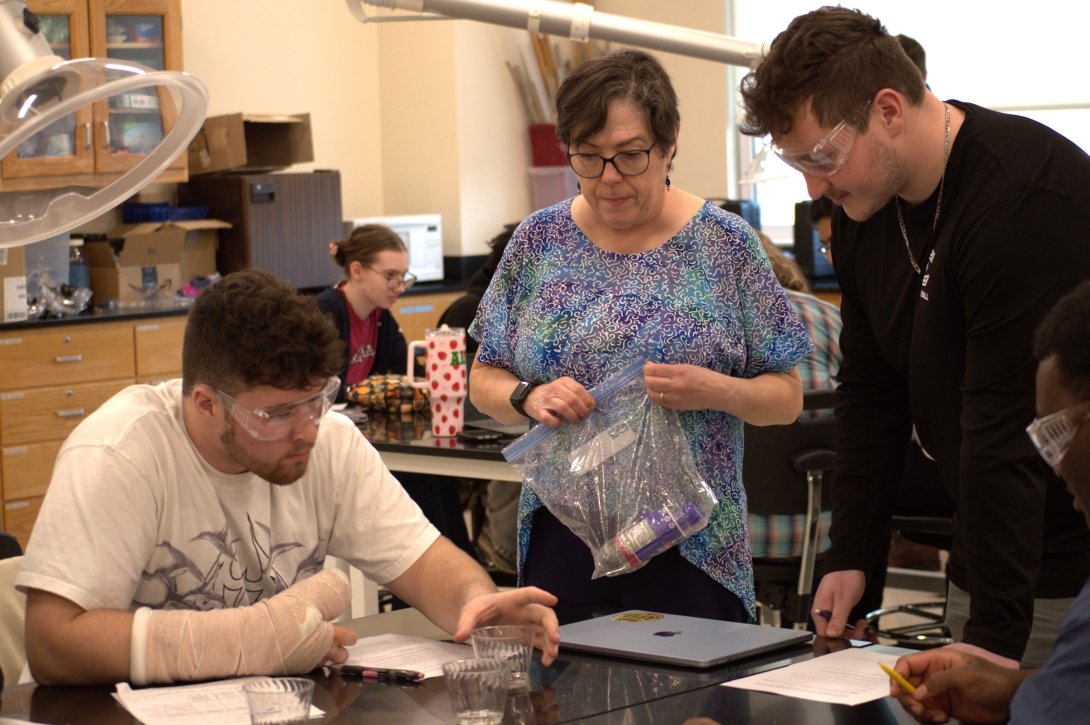
Students are stepping into the role of a forensic analyst in the Chemistry and Crime course, learning about scientific principles, a variety of crime scene investigation techniques and how what is seen on TV differs from reality.
Intended for non-STEM major students, the class provides a basic understanding of chemical principles along with case studies that analyze simulated forensic evidence. It’s a perfect fit for CentreTerm, the College’s winter term that allows students to dive deeply into a single course, sometimes unrelated to their major.
“People are interested in the science of solving crimes,” said Jennifer Muzyka, Ewing T. Boles Professor of Chemistry. “Even for non-science majors, if you put the lessons into the context of a crime that’s happened, it can be captivating.”
Whether students hope to pursue careers in criminology or law enforcement, are fans of CSI TV shows, or simply are interested in how crimes are solved, they’re learning about the vital role chemistry plays in criminal cases. Muzyka ensures this is done through traditional, independent study, group discussion and engaging lab work.
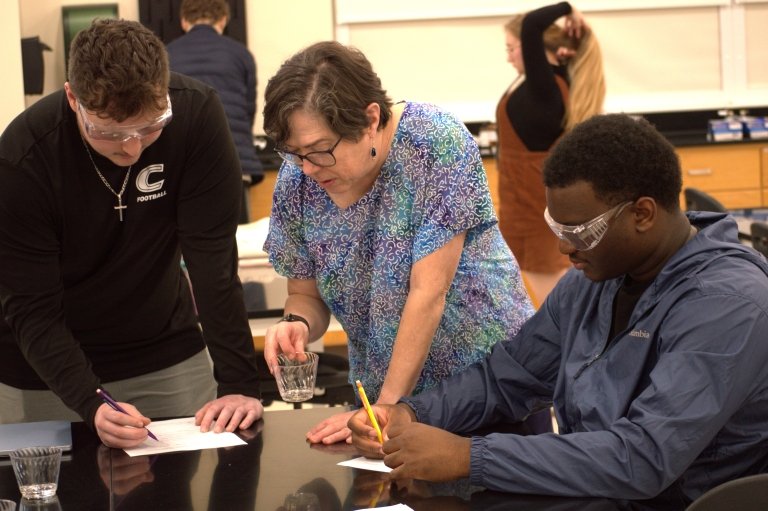
“People watch CSI and think there’s going to be beautiful forensic evidence for all cases because they solve the crime in 40 minutes,” Muzyka said. “In real life, investigators don’t always have a definitive link to who did the crime. They sometimes have a harder time getting convictions for cases because they don’t have forensic evidence.”
She also has students explore how bias can affect forensic examination in real-life cases and rulings. In one class project, students conduct research on the Innocence Project, a nonprofit that focuses on criminal justice reform and wrongful convictions. They’ll examine the evidence from real cases, evaluate how they were decided and discuss whether the evidence was definitive.
These analyses and examinations encourage students to evaluate complex situations objectively and provide valuable career preparation. For future lawyers or law enforcement officers in the class, Chemistry and Crime provides a valuable foundation of knowledge for their field.
“Being exposed to this class might help them have a leg up when they go into certain fields,” Muzyka said. “They’ll have seen the different side of how to analyze evidence.”
And for the students whose career paths lead elsewhere, the tools they learn can help them weigh data and make objective decisions.
With Chemistry and Crime as their sole course during CentreTerm, students can focus deeply on the material — an approach that’s especially helpful for those with little prior chemistry experience who are interested in the subject.
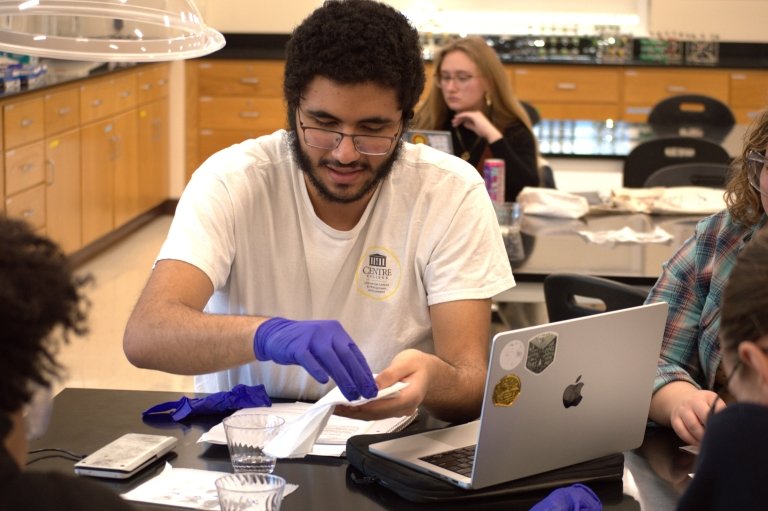
“I had never taken any chemistry before, and I want to get some basic knowledge in all science fields and some of the humanities as well,” said Adam Ibrahim, class of 2028. “This seemed like a class that would do that and be fun.”
The course’s appeal is also shaped by the shorter, accelerated format, which allows students to explore unexpected subjects.
“That’s the beauty of CentreTerm,” said Charli Brusnahan, class of 2027, a Politics and Spanish major. “This class is a wonderful example of what a liberal arts education is actually meant to be,” she said. “You can apply it to your own interests.”