Centre computer science professor brings students into the world of AI
The widespread availability of artificial intelligence tools has quickly changed the way we work, communicate, and interact with the world around us. Experts believe the implications for tomorrow’s workforce are impossible to deny.
That inevitability is one of the reasons Centre College Associate Professor of Computer Science and Data Science Thomas Allen launched his course AI in Everyday Language, calling it one of his favorite classes to teach.
“Artificial intelligence has reshaped our society in many ways already, and many people think that it will continue to reshape it in ways that are difficult to predict. I think all of us are going to have to deal with the impacts of this, both good and bad,” he said.
Machine learning has been around for decades, but the advancement of large learning models like ChatGPT has brought the technology into the mainstream and given non-computer scientists access to tools they had not previously imagined.
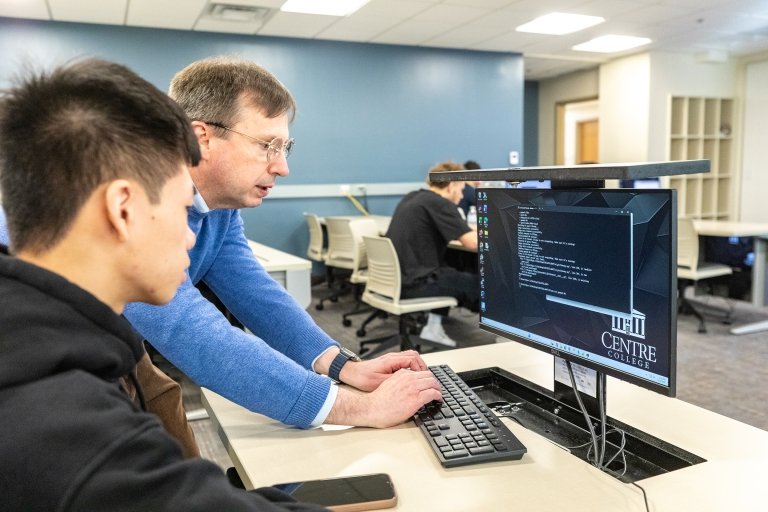
“Because of all the background you previously needed in calculus, linear algebra, mathematical statistics and programming to even talk about this, it was inaccessible,” he said. “So how do we explain that in a way that people can understand? Because if we have no conception of how this works, then it's sort of like we’re driving with a blindfold on.”
AI in Everyday Language allows students from a variety of majors to dive into the history and future of AI, examining the utility and promise of the technology, as well as its less-discussed limitations.
“I don’t do coding and all that stuff, but I was interested in AI and all the things it could be used for,” said Daniel Covington, a Business major in the class of 2027. “The first part of this course was learning how AI is made because a lot of people have preconceived notions or misunderstandings about how it works. There is no thinking involved. It’s all mathematical equations.
“Once you know how it works, you can learn how to tell it what you need.”
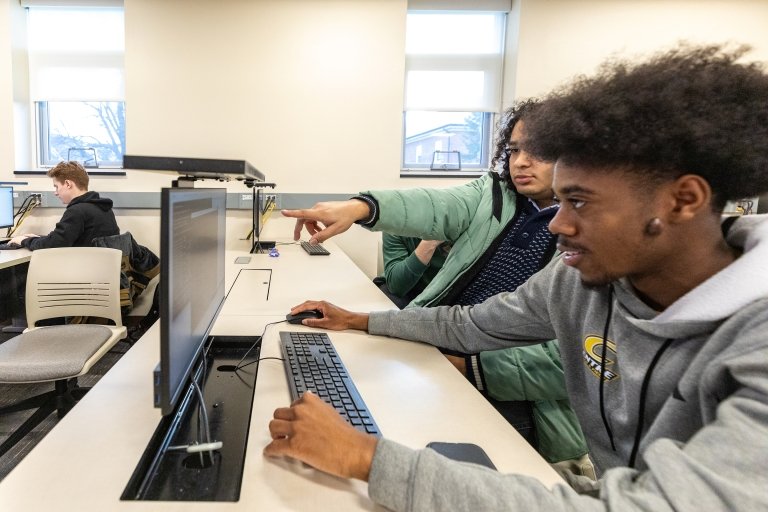
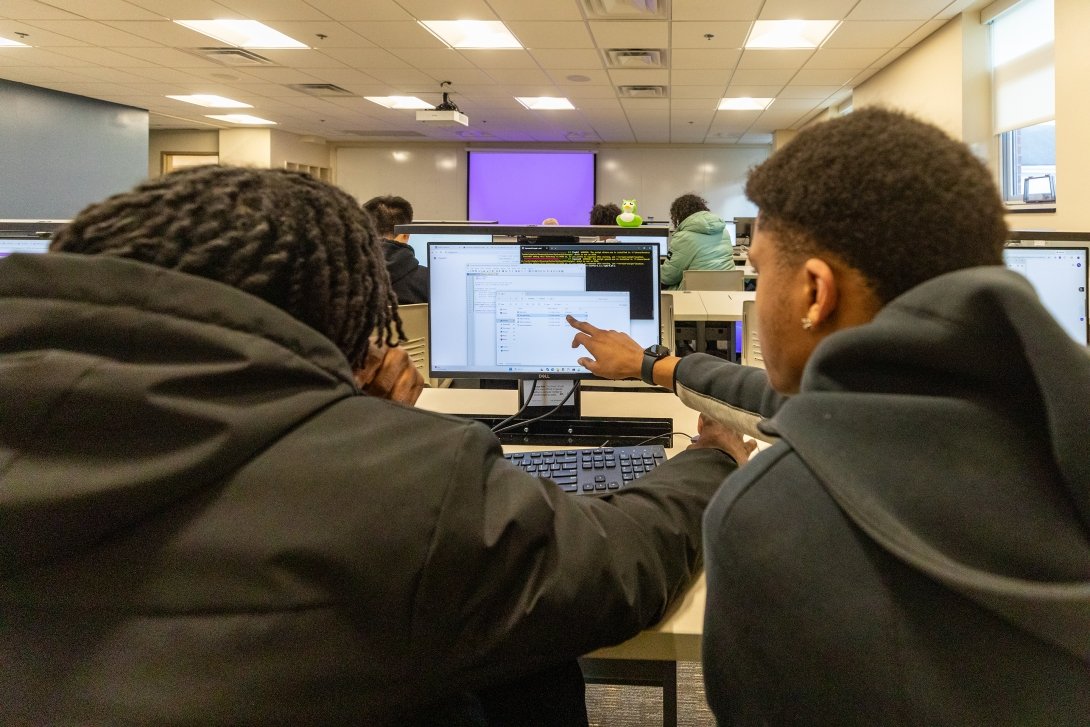
The limitations of AI were evident during a recent class when students were attempting to use AI to write code for a program that could identify what the users were drawing. One student pushed back from the worktable and threw up his hands in frustration. “This is what’s supposed to take over the world?”
Part of Allen’s goal is to strip away some of the mythology of how AI may change the world and understand both how to use the tool and, perhaps more importantly, when to use it.
“I do think that the more we know about this and the better we understand it, the better equipped we are,” Allen said. “I think we at Centre College have a critical role to play in this. We want students to have diversity in what they learn, so you can’t take all computing classes. You must take writing classes, and you have to take history. We think that’s an important part of people’s experiences, so our students get training in a multitude of things.”
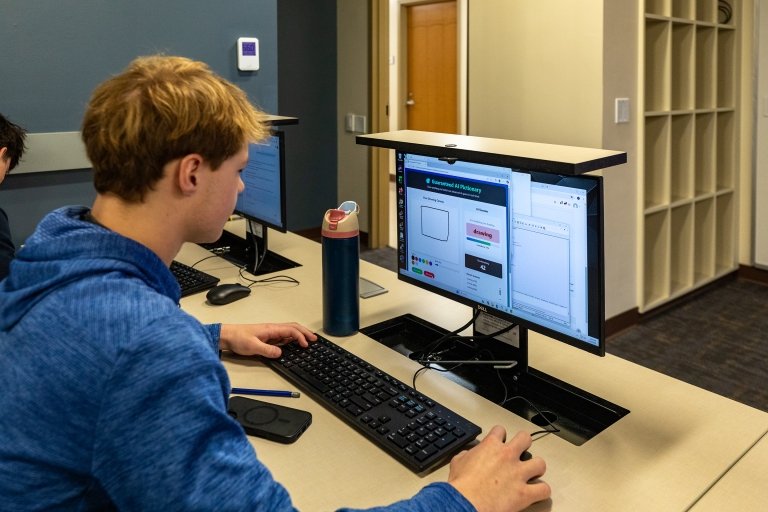
That training arms students with problem-solving and communication skills that are critical in a workplace where productivity pressures may become heightened by the availability of AI tools.
“The hype is not new,” Allen said of the rush to both praise and vilify AI. “Hype goes back to the beginning of electricity with the whole Frankenstein story. So both the good and the bad possibilities exist, but understanding what AI does and doesn't do, what its limitations are, is important because I can't use it effectively if I don't know its limitations.”
Centre’s educational approach to the liberal arts and sciences helps students discern when AI can be used effectively as a tool, Allen said, and when those limitations render it unreliable and soulless, or threaten their own skill-building.
The evolving challenges of keeping up with technological advancements also makes the work students do in the classroom more important, allowing them to be adaptable in an ever-changing field.
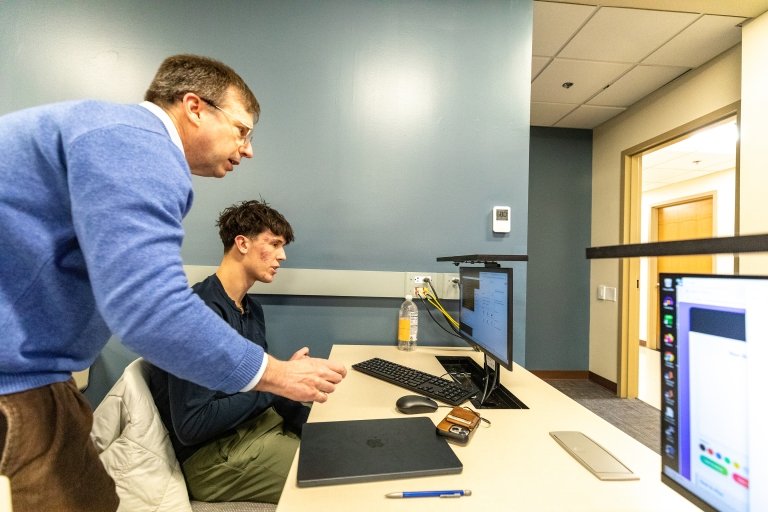
“There may be some things graduates will have to learn on the job,” he said. “But our students have the most important skill, which is knowing how to take these concepts like statistics and computing, and communicate them in a way that my boss, my colleagues, my stakeholders, and the person using my product can understand.
“I think that’s what we need broadly across society — people who understand fundamentally how this technology works, what it can do, its promises, its pitfalls and how we as a society need to relate to that.”